
One year for Christmas, my mother-in-law gave my children a “Chat Pack.” It’s a box of cards with simple questions designed to start conversations.
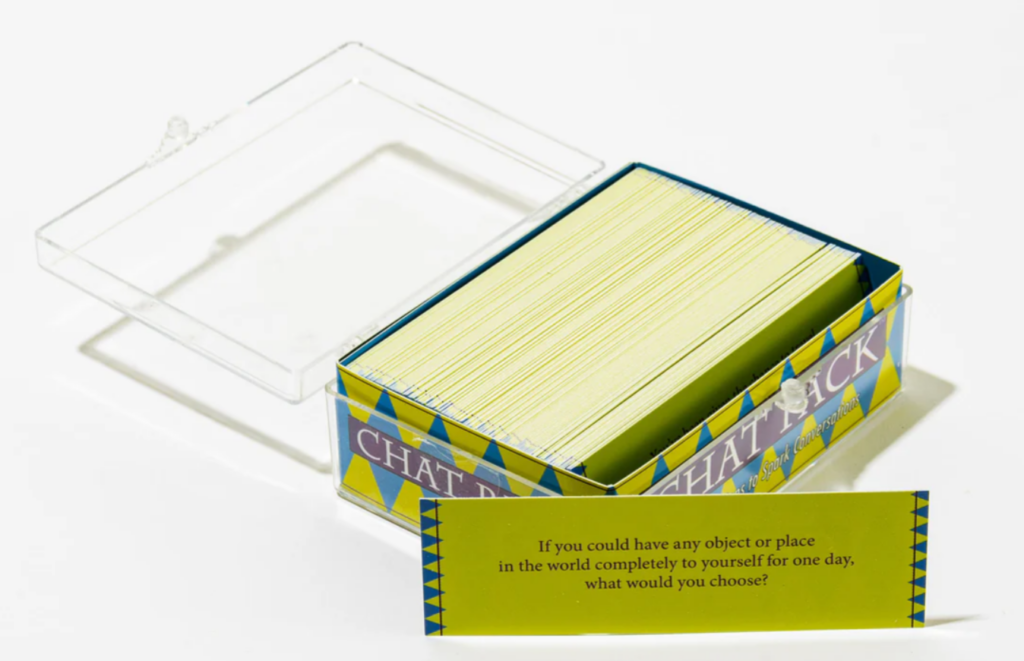
My children are all now adults, but they loved it when they were kids. We kept the Chat Pack in the car, pulling out the cards on long road trips. They love hearing my husband and me answer the questions, which sometimes stimulated deeper discussions about our worldview and the experiences that shaped us. And this got me thinking…
It is through our conversations that we share our family traditions, values, hopes and dreams; that we teach our children who we are and what is most important to us; that we express our love for them.
So what would happen if we were no longer around to have these conversations with them? How would we pass down these intangible treasures that are truly worth more than all our material wealth?
One way to do this is through an ethical will.
What’s An Ethical Will?
An ethical will is not a binding legal document. Instead, it is a heartfelt letter that allows us to express our love for our family and close friends, describe the things that are most meaningful to us, pass on life lessons and values, and share family stories and traditions in a way that can be passed from one generation to the next.
The History of the Ethical Will
A revival of an old Jewish tradition, the ethical will has gained popularity in recent years. It can take on a variety of forms, from a short letter or a long autobiography. Randy Pausch, a computer science professor diagnosed with terminal cancer, wrote one called “The Last Lecture”. It can also take the form of a video or audio tape, or a series of tapes.
Some people choose to share their ethical wills during their lifetimes on special events. Others leave instructions to share them after their death. For example, I often incorporate a provision in a client’s Will or Trust allowing them to incorporate a separate document called “Words of Wisdom” to share the valuable lessons they have learned throughout their lives and offer insights and advice that they hope will guide their children in their own journeys. Whatever the form, and whenever they are shared, they are likely to be more treasured than any material wealth you leave behind.
If you would like to write an ethical will, but don’t know where to start, several can help guide you, which you can see by clicking here.