
Rania Combs, Texas and North Carolina estate planning attorney. Last reviewed October 2026.
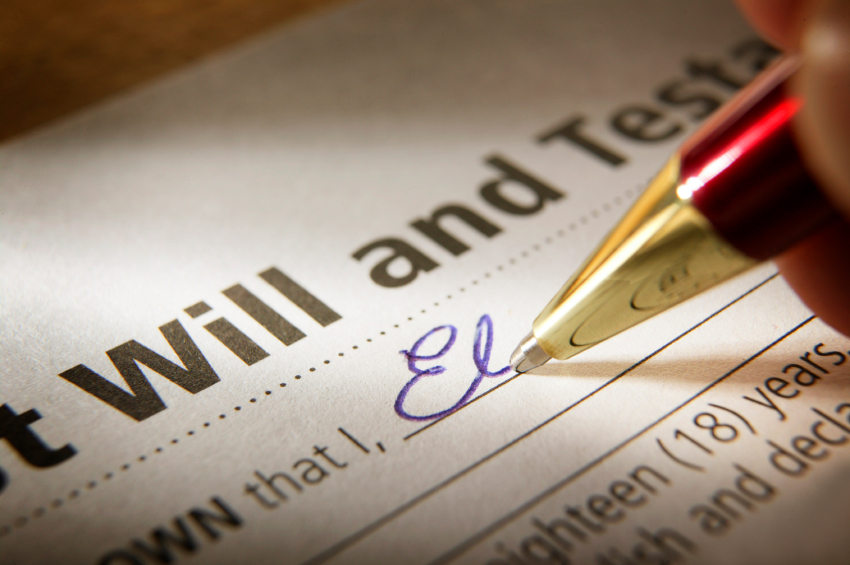
A Last Will and Testament allows you to specify who should receive your property after your death, nominate an executor to administer your estate, and, nominate the person you would like to serve as their guardian if you have minor children,
But simply writing down your wishes does not necessarily create a legally valid Will.
North Carolina law establishes specific requirements for making a Will. Section 31-3.1 says no Will is valid unless it complies with Chapter 31 of the North Carolina General Statutes. If those requirements are not followed, the Will may not be admitted to probate. If you die without a valid Will in North Carolina, state intestacy laws may determine who receives your property instead.
So, what makes a Will legally valid in North Carolina?
In general, the person making the Will must have the required legal and mental capacity, must intend for the document to operate as a Will, and must execute it according to the legal requirements that apply to the particular type of Will.
North Carolina Will Requirements at a Glance
| Type of Will | Statute | Signing and witnesses | Notary needed? |
|---|---|---|---|
| Attested written Will (the typical typed Will) | G.S. 31-3.3 | Signed by the testator (or by another person in the testator’s presence and at the testator’s direction), then attested by at least two competent witnesses who sign in the testator’s presence | No; however, most Wills attorneys draft are self-proved, which requires a notary |
| Holographic Will (handwritten) | G.S. 31-3.4 | Written entirely in the testator’s handwriting and subscribed by the testator, or with the testator’s name written in or on the Will in the testator’s own handwriting; no witnesses required | No |
| Nuncupative Will (oral) | G.S. 31-3.5 | Declared in last sickness or imminent peril of death before two competent witnesses present at the same time and specially asked to bear witness; testator must not survive | No. May pass personal property only (G.S. 31-3.2(b)) |
Who can make a Will? G.S. 31-1 says any person of sound mind who is 18 years of age or older.
What Makes a Will Valid in North Carolina?
For most written Wills, three fundamental requirements must be satisfied:
- The person making the Will must have legal and testamentary capacity.
- The person must intend for the document to operate as their Will.
- The Will must be properly executed according to North Carolina law.
The precise execution requirements depend on whether the Will is an attested written Will or a holographic Will.
1. The Testator Must Be at Least 18 and of Sound Mind
The person who makes a Will is called the testator.
Under North Carolina law, a person must generally be at least 18 years old and of sound mind to make a Will.
Being of “sound mind” does not necessarily mean having perfect memory or flawless mental clarity. The important issue is whether the testator has sufficient testamentary capacity at the time the Will is executed.
Generally, that means the testator should understand:
- The nature and extent of the property they own;
- The people who would naturally be expected to benefit from their estate;
- How they are choosing to distribute their property; and
- That they are signing a document that will control the disposition of their property after death.
A person experiencing some memory problems or cognitive decline is not automatically incapable of making a Will. Capacity is evaluated based on the person’s mental condition at the time the Will is executed. This is one reason questions about capacity can become especially important when a Will is signed late in life or while someone is experiencing significant health problems.
2. The Testator Must Have Testamentary Intent
The testator must intend for the document to function as a Will. This concept is known as testamentary intent.
A preliminary list, set of planning instructions, or document describing what someone might want to do in the future does not necessarily constitute a Will. The person must intend the document to express how their property should be distributed at death.
Clear drafting can help avoid disputes about whether a document was intended to be legally operative or was simply a collection of ideas or instructions.
3. The Will Must Be Properly Executed
North Carolina recognizes different forms of Wills, and the execution requirements vary depending on the type. G.S. 31-3.2 lists them.
The two principal types of written Wills are:
- Attested written Wills; and
- Holographic Wills.
What Is an Attested Will in North Carolina?
An attested Will is the type of Will most people think of when they imagine a traditional estate planning document. Under G.S. 31-3.3, it is a written Will signed by the testator and witnessed by at least two competent witnesses.
The testator must either:
- Sign the Will personally; or
- Direct another person to sign the testator’s name while in the testator’s presence.
The testator must also indicate to the witnesses that the document is their Will. This can occur by signing the Will in the witnesses’ presence or by acknowledging a signature that was previously placed on the document. The witnesses do not have to sign in each other’s presence; however, at least two competent witnesses must then sign the Will in the testator’s presence.
How Many Witnesses Does a North Carolina Will Need?
An attested Will requires at least two competent witnesses. This is one of the most important execution requirements and one of the easiest places for a do-it-yourself Will to go wrong.
Having a document notarized does not replace the requirement for two witnesses.
Can a Beneficiary Witness a Will in North Carolina?
North Carolina law does not automatically prohibit a beneficiary from serving as a witness. G.S. 31-10 says a witness who receives a gift under the Will, or whose spouse does, is still a competent witness.
However, doing so can create serious problems.
If a witness or the witness’s spouse receives a beneficial interest under the Will, and there are not at least two other disinterested witnesses, the gift to the interested witness, the witness’s spouse, and anyone claiming under them is void. The rest of the Will still stands.
For that reason, using witnesses who are not beneficiaries under the Will is generally a much safer practice.
What Is a Holographic Will in North Carolina?
A holographic Will is a handwritten Will.
North Carolina recognizes holographic Wills if they satisfy specific statutory requirements under G.S. 31-3.4. You can compare how another state treats them in our guide to holographic Wills in Texas.
Unlike an attested Will, a qualifying holographic Will does not require witnesses.
In 2021 the General Assembly repealed a third requirement that had applied to holographic Wills (an older rule about where the Will was kept). The repeal applies to estates of people who died on or after July 8, 2021. What remains is the handwriting requirement: the Will must be written entirely in the testator’s handwriting, and the testator’s name must be subscribed or written in or on the Will in the testator’s own handwriting.
That can make holographic Wills appear attractive to people who want to create a Will without assistance. But the absence of a witness requirement does not mean holographic Wills are necessarily simple.
Proving one can be harder than proving an attested Will. Under G.S. 28A-2A-9, a holographic Will may be probated only on the testimony of at least three competent witnesses who believe the Will and the testator’s name are in the testator’s handwriting.
A handwritten Will can create questions such as:
- Whether the handwriting is actually the testator’s;
- Whether the document was intended to be a Will;
- Whether language in the document is legally clear;
- Whether it the Will contains a residuary clause; and
- Whether property was adequately identified.
Holographic Wills can therefore create avoidable uncertainty during probate.
Does a Will Have to Be Typed in North Carolina?
No.
A valid North Carolina Will does not necessarily have to be typed. North Carolina recognizes qualifying holographic Wills written in the testator’s handwriting.
However, a typewritten Will must comply with the witness and execution requirements applicable to attested Wills.
The important distinction is not simply whether a Will is typed or handwritten. It is whether the Will satisfies the statutory requirements for the particular type of Will being used.
Are Oral Wills Valid in North Carolina?
North Carolina recognizes oral Wills, called nuncupative Wills, but only in very limited circumstances.
An oral Will may qualify when the person making it is in their last sickness or in imminent peril of death and does not survive that illness or danger. The Will must also be declared in front of two competent witnesses who are simultaneously present, and the testator must specifically ask them to bear witness to the statement.
Nuncupative Wills are also much more limited in what they can transfer than written Wills. Under G.S. 31-3.2(b), they can devise personal property only.
Because these Wills apply only in exceptional circumstances, they should not be viewed as a substitute for creating a properly executed estate plan.
Does a Will Have to Be Notarized in North Carolina?
No.
Notarization is not required merely to make an otherwise properly executed North Carolina Will valid.
For an attested Will, the critical requirements include the testator’s signature and the signatures of the required witnesses. However, a notary becomes relevant when the Will is made self-proved.
Can I Write My Own Will and Have It Notarized in North Carolina?
This is a very common question, and the answer depends on how the document was written.
- Typed or printed Will, notarized but with fewer than two witnesses: not a valid attested Will. The notary does not count as a witness.
- Typed Will with two competent witnesses, no notary: valid as an attested Will. A notary is optional.
- Handwritten Will, notarized: valid only if it meets the holographic Will rules, meaning it is entirely in the testator’s handwriting and is signed in the testator’s handwriting. The notary stamp does not turn a typed document into a valid holographic Will.
- Typed Will with two witnesses and a notary taking sworn statements: valid, and also self-proved.
What Is a Self-Proving Will in North Carolina?
North Carolina law allows an attested Will to be made self-proved. The statute is G.S. 31-11.6.
Generally, the testator and witnesses make sworn acknowledgments before an authorized officer, commonly a notary public. The statute allows this to be done at the signing, or at any later time after an attested Will has been executed.
A self-proving Will can simplify the probate process because the sworn statements can be accepted as evidence of proper execution rather than requiring the witnesses to later prove the Will in court. G.S. 28A-2A-8(a)(4) allows an attested Will to be probated upon a showing that it was made self-proved.
This can be particularly valuable when many years pass between the signing of a Will and the testator’s death.
By that point, a witness:
- may have moved;
- may be difficult to locate;
- may have died; or
- may no longer remember the signing ceremony clearly.
Making an attested Will self-proved can therefore reduce unnecessary complications during probate.
Is a Notary a Substitute for Witnesses?
No.
This is a common estate planning mistake.
For an ordinary attested Will, notarization alone does not satisfy North Carolina’s requirement that the Will be attested by at least two competent witnesses. A notary and witnesses serve different legal functions.
The witnesses observe or acknowledge the Will’s execution as required by statute. The notary typically becomes involved in making the Will self-proved by administering the required acknowledgments and oaths.
Simply signing a typewritten Will in front of a notary without satisfying the witness requirements can result in a document that does not qualify as a valid attested Will.
Can I Write My Own Will in North Carolina?
North Carolina law does not require an attorney to draft your Will, but that does not mean every do-it-yourself Will will accomplish what the person intended.
Problems with self-prepared Wills often arise not because the person failed to express their general wishes, but because the legal document was not executed correctly or did not address an important contingency.
Common problems can include:
- Failing to use two competent witnesses for an attested Will;
- Assuming notarization replaces witnesses;
- Using a beneficiary as a witness without understanding the consequences;
- Failing to name alternate beneficiaries;
- Failing to name a successor executor;
- Using ambiguous language;
- Failing to plan for beneficiaries who die before the testator;
- Failing to coordinate the Will with beneficiary designations;
- Assuming a Will overrides beneficiary or pay on death designations; and
- Failing to update the Will after major family or financial changes.
A document can be technically valid and still produce a poor estate planning result. Validity is therefore only one part of good estate planning.
Does a Will Control All of Your Property?
No.
Even a perfectly valid Will generally controls only property that passes through the probate estate.
Some assets may pass automatically outside the Will.
Examples can include:
- Life insurance with a valid beneficiary designation;
- Retirement accounts with named beneficiaries;
- Payable-on-death or transfer-on-death accounts;
- Certain jointly owned property with survivorship rights; and
- Property held in a trust.
This distinction is important because beneficiary designations and ownership arrangements can override what someone expects to happen under their Will. For example, your Will might say that your estate should be divided equally between your children, but a retirement account naming only one child as beneficiary may pass directly to that child outside the Will.
A complete estate plan should therefore coordinate the Will with beneficiary designations, account ownership, trusts, and other transfer arrangements.
What Happens if a Will Is Not Valid in North Carolina?
If a Will does not satisfy North Carolina’s legal requirements, it may not be enforceable. If there is no earlier valid Will, some or all of the probate estate may pass under North Carolina intestate succession laws.
Intestacy means state law determines who inherits according to a statutory formula rather than according to the deceased person’s individual preferences and circumstances. The result may be very different from what the person intended.
For a detailed explanation of how this works, see What Happens If You Die Without a Will in North Carolina.
Creating a valid Will allows you to exercise significantly greater control over who receives your probate property and who administers your estate.
What Can You Include in a North Carolina Will?
A properly drafted Will can accomplish much more than simply identifying beneficiaries.
Depending on your circumstances, a Will can be used to:
- Specify who receives probate property;
- Name an executor to administer your estate;
- Name successor executors;
- Nominate a guardian for minor children;
- Create trusts for children or other beneficiaries;
- Establish the age or circumstances under which beneficiaries receive inherited property;
- Address personal property;
- Provide for alternate beneficiaries; and
- Coordinate parts of a broader estate plan.
The provisions appropriate for one person may be very different from those appropriate for another.
Someone with minor children, for example, may require significantly different planning from a person whose children are adults.
Common Mistakes When Making a Will in North Carolina
Signing Without Two Witnesses
A typewritten Will signed only by the testator generally does not qualify as a valid attested Will merely because the testator signed it.
Using Only a Notary
A notary does not replace the two-witness requirement for an attested Will.
Using Interested Witnesses
Having a beneficiary serve as a witness can create unnecessary problems with that person’s inheritance.
Waiting Until Capacity Is Questionable
When a person waits until serious cognitive decline or severe illness before signing estate planning documents, disputes over testamentary capacity may become more likely.
Failing to Coordinate Beneficiary Designations
A Will does not ordinarily override a valid beneficiary designation on an asset that passes outside probate.
Using Unclear Language
A technically valid Will can still trigger disagreements or litigation if its provisions are ambiguous.
Failing to Update the Will
Marriage, divorce, births, deaths, relocations, changes in assets, and changes in relationships may all create reasons to revisit an estate plan. For how to do that properly, see updating, revoking, or replacing a Will in North Carolina.
Frequently Asked Questions About North Carolina Will Requirements
How old do you have to be to make a Will in North Carolina?
Generally, a person must be at least 18 years old and of sound mind (G.S. 31-1).
How many witnesses are required for a Will in North Carolina?
An attested written Will requires at least two competent witnesses (G.S. 31-3.3).
Do the witnesses have to sign at the same time?
North Carolina law requires the witnesses to sign in the testator’s presence, but they do not have to sign in each other’s presence.
Does a North Carolina Will need to be notarized?
No. Notarization itself is not required for the validity of an otherwise properly executed Will. A notary is typically involved when an attested Will is made self-proved.
Can a handwritten Will be valid in North Carolina?
Yes. A qualifying holographic Will can be valid without witnesses if it satisfies North Carolina’s statutory requirements. See the holographic Will section above.
Can a beneficiary witness my Will?
A beneficiary can potentially serve as a witness, but doing so may jeopardize the beneficiary’s inheritance under certain circumstances. Using disinterested witnesses is generally preferable.
Are online Wills valid in North Carolina?
The fact that a Will was prepared using an online service does not by itself determine whether it is valid. The document must still satisfy North Carolina’s substantive and execution requirements.
A document generated online but signed incorrectly may be invalid.
Can I make a Will without a lawyer?
Yes. North Carolina does not require an attorney to prepare a Will. However, execution errors, unclear drafting, and failure to coordinate the Will with the rest of an estate plan can create significant problems later.
Why Work With a North Carolina Estate Planning Attorney?
The legal requirements for signing a Will may appear straightforward. But effective estate planning involves more than satisfying the minimum formalities necessary to create a valid document.
An experienced North Carolina estate planning lawyer can help you:
- Determine how your assets would pass under your current plan;
- Draft provisions that clearly reflect your wishes;
- Properly execute your Will;
- Select appropriate executors and guardians;
- Coordinate beneficiary designations;
- Plan for minor children or other beneficiaries who may need protection;
- Evaluate whether a trust should be part of your estate plan; and
- Reduce the risk of avoidable disputes during probate.
A valid Will is the starting point. The larger objective is to create an estate plan that actually works when your family needs it.
Creating or Updating a Will in North Carolina
North Carolina imposes specific legal requirements on Wills, and overlooking even a seemingly minor execution formality can create significant problems after death.
For most people creating an attested Will, the key requirements include having testamentary capacity, intending the document to operate as a Will, properly signing it, and having at least two competent witnesses attest to it as required by North Carolina law.
Notarization is not a substitute for those requirements, although making a Will self-proved can simplify probate later.
If you are creating your first Will or reviewing an older estate plan, make or update your North Carolina Will with an estate plan designed to carry out your wishes. If you already have a Will, see how to update, revoke, or replace a Will in North Carolina. Schedule a free introductory conference with Rania Combs Law.