


Rania Combs, Texas and North Carolina estate planning attorney. Last reviewed October 2026.
Both Lady Bird Deeds and Texas Transfer on Death Deeds (TODDs) can transfer Texas real estate at death without requiring that property to pass through probate. Both allow an owner to keep control of the property during life. But they are not identical, and the right choice depends on the owner’s capacity, title history, beneficiaries, creditor issues, and broader estate plan.
A Texas Transfer on Death Deed is authorized by statute. A Lady Bird Deed, also called an enhanced life estate deed, is a deed form recognized under Texas common law. Each has different execution requirements, title considerations, and consequences after the owner’s death.
This page compares the two deeds side by side. For a full explanation of how a Lady Bird Deed works, including signing, recording, and the problems families run into, read our complete guide to the Lady Bird Deed in Texas.
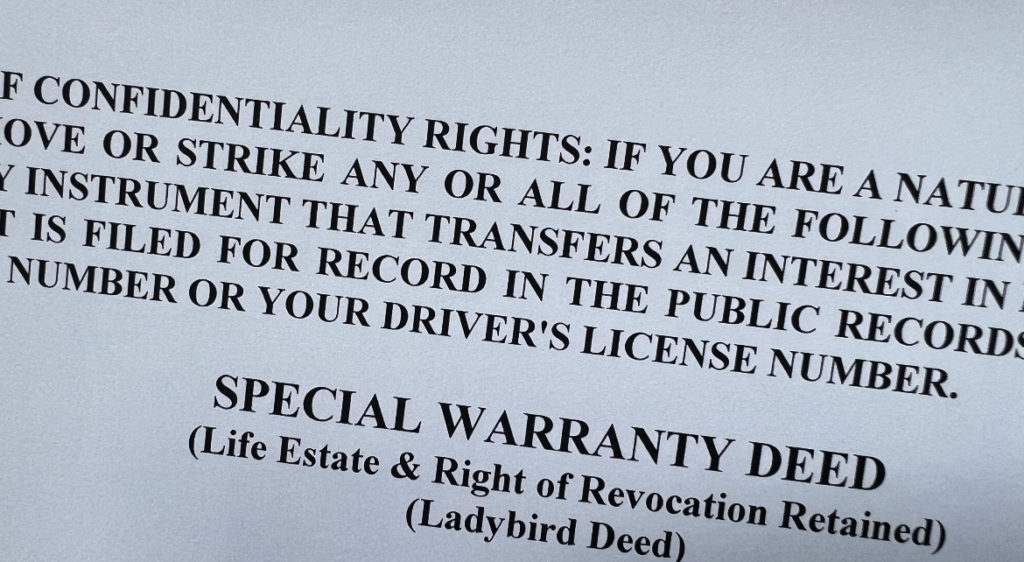
Lady Bird Deed vs. Transfer on Death Deed in Texas: The Short Answer
A Texas Transfer on Death Deed is usually appropriate when an owner with capacity wants to name one or more beneficiaries for Texas real estate while retaining the right to sell, refinance, revoke the deed, or change beneficiaries during life. To be effective, the deed must meet the statutory requirements, including being recorded before the owner’s death.
A Lady Bird Deed can also reserve broad control to the owner during life and transfer a remainder interest at death. It may be considered when a statutory TOD deed is not available or does not fit the title and planning facts. Because it is not governed by the same detailed statute, the deed must be drafted with particular care and reviewed in the context of current Texas law and title practices.
Lady Bird Deed vs. TOD Deed: Side-by-Side Comparison
| Question | Texas Transfer on Death Deed | Lady Bird Deed |
|---|---|---|
| Where the rules come from | Statute: Texas Real Property Transfer on Death Act, Estates Code Chapter 114 | Texas common law and title practice; no dedicated statute |
| Who can sign it | Only the owner. A transfer on death deed may not be created through a power of attorney (§114.054(b)) | The owner; whether an agent can sign depends on the authority granted in the power of attorney |
| Capacity needed | Same capacity as required to make a contract (§114.054(a)) | Not set by a dedicated statute; the usual capacity rules for signing a deed apply |
| Recording | Must be recorded in the county where the land is located before the owner dies, or it is not effective (§114.055) | Not required by statute for validity, but recording is the best practice |
| Owner’s control during life | Owner may sell, mortgage, or transfer; beneficiary has no interest (§114.101) | Owner reserves a life estate plus the power to sell, mortgage, or change the plan |
| Revoking or changing it | By a later recorded TOD deed or recorded revocation. A Will cannot revoke it (§114.057) | By a new recorded deed, or by conveying the property during the homeowner’s life |
| Warranty of title | None: the property passes without a covenant of warranty even if the deed says otherwise (§114.103(d)) | Depends on how the deed is drafted |
| Creditors after death | Personal representative may reach the property if the estate is insufficient, generally within two years (§114.106) | Raises its own creditor questions; drafted individually |
| Mortgage due-on-sale clause | The statute says a TOD deed is not a transfer that triggers a due-on-sale clause (§114.101(5)) | No statutory language on point; it’s safest to confirm with the lender |
What Is a Texas Transfer on Death Deed?
A Texas Transfer on Death Deed is authorized by the Texas Estates Code. It lets an owner name one or more beneficiaries to receive the owner’s interest in Texas real property at the owner’s death. During life, the owner keeps the right to sell, mortgage, transfer, or otherwise deal with the property.
For a TOD deed to be effective, it must contain the essential elements and formalities of a recordable deed, state that the transfer occurs at the transferor’s death, and be recorded in the county where the property is located before the transferor dies. A Will does not revoke or supersede a recorded TOD deed, so the deed and estate plan must be coordinated.
What Is a Lady Bird Deed?
A Lady Bird Deed arises from Texas common law. It creates an enhanced life estate for the owner and names one or more remainder beneficiaries. The owner generally retains the power to occupy, sell, mortgage, change, or cancel the arrangement without the remainder beneficiary’s consent.
Unlike a Texas TOD deed, there is no statutory requirement that the deed be recorded. Recording is nevertheless important for notice, title, and practical administration. Whether a particular deed is valid and whether a title company will accept it can depend heavily on the deed language, the chain of title, and the facts at death.
How Lady Bird Deeds and Texas Transfer on Death Deeds Are Alike
Both documents can help a property owner plan for the transfer of Texas real estate at death without placing the property in a revocable living trust. In many cases, each can allow the owner to retain control while alive and provide a direct transfer to the named beneficiary after death.
- Both can be part of a plan to avoid probate for a specific piece of Texas real estate.
- Both can preserve the owner’s ability to sell or mortgage the property during life.
- Neither generally gives the named beneficiary a present ownership interest while the owner is alive.
- Both should be coordinated with the owner’s Will, beneficiary designations, trust plan, and title documents.
Key Differences Between Lady Bird Deeds and Transfer on Death Deeds
Statutory Rules and Recording
A TOD deed is governed by Chapter 114 of the Texas Estates Code. It must be recorded before the transferor’s death. If it is not recorded in time, it is not effective as a TOD deed.
A Lady Bird Deed does not have the same statutory recording requirement for validity between the parties. Still, an unrecorded deed can create practical proof and title issues. Recording provides public notice and is generally an essential part of reliable real-estate planning.
Capacity and Power of Attorney
Only the owner may create a Texas TOD deed. An agent acting under a durable power of attorney may not create one on the owner’s behalf. This can matter when an owner has lost capacity before completing estate planning.
A power of attorney may authorize an agent to sign another type of deed, but whether an agent can execute a Lady Bird Deed depends on the actual authority granted, the owner’s circumstances, and the deed.
Creditor Claims and the Two-Year Period
Property transferred by a TOD deed is not treated as property of the probate estate merely because it passes at death. However, if the estate is insufficient to satisfy specified claims, expenses, taxes, or family allowances, a personal representative may enforce liability against the TOD-deed property.
A proceeding to enforce that liability generally must be started by the second anniversary of the transferor’s death. This potential liability can affect a beneficiary’s ability to sell or refinance shortly after death and may influence title-insurance requirements.
One thing to watch is whether courts will imposing rules that apply to Transfer on Death Deeds on Lady Bird Deeds.
According to legal precedent, if a statute revises the common law, the statute controls. However, the Transfer on Death Deed statute specifically provides that “the statute does not affect any method of transferring real property otherwise permitted under the laws of the state.”
So a question remains about whether courts will interpret Lady Bird Deeds as a “method of transferring real property otherwise permitted under the laws” of Texas. If so, the Transfer on Death Deed statute would not control them. If not, then the rules that apply to Transfer on Death Deeds may be imposed on Lady Bird Deeds.
Warranties and Title
A Texas TOD deed transfers real property without a covenant of warranty of title even if the deed states otherwise. That statutory rule can matter when a beneficiary later sells the property or seeks title insurance. A Lady Bird Deed can be drafted in different ways, but the available warranty and title consequences should be reviewed with the owner’s attorney and title company.
Medicaid Estate Recovery: Lady Bird Deed vs. TOD Deed
Families usually ask about these deeds because a parent may need nursing home care. Two separate Medicaid issues are involved, and they are often mixed up.
Eligibility. Most of the worry is about giving property away and triggering a penalty period. A TOD deed is addressed in the statute: Section 114.101(4) says a recorded TOD deed does not affect the owner’s or beneficiary’s eligibility for any form of public assistance, “subject to applicable federal law.” The owner who keeps the right to sell or revoke has not given the house away, and the same logic is why a Lady Bird Deed is generally not treated as a gift. For many Texans the homestead is a non-countable asset, so the deed may not be needed for eligibility at all. See whether transferring a homestead affects Medicaid.
Estate recovery after death. Texas can seek repayment of certain Medicaid long-term care costs from a deceased recipient’s estate. For TOD deeds, Section 114.106(b) provides that property passing by a TOD deed is not considered property of the probate estate for any purpose, including the Government Code provision on recovery of Medicaid assistance. Our article on TOD deeds and Medicaid estate recovery goes further.
A Lady Bird Deed has no comparable statute. Its protection in practice rests on how the Texas Health and Human Services Commission applies its recovery rules, and that agency practice can change. Do not rely on either deed as a Medicaid strategy without advice from an attorney familiar with the current Texas and federal rules.
Title Insurance and Resale After Death
The practical test of either deed often comes when a beneficiary tries to sell. A few points to raise with a title company before you sign, not after the owner dies:
- TOD deed: the no-warranty rule and the two-year creditor window in Section 114.106 can lead a title company to ask for additional documents or an affidavit before insuring a quick sale.
- Lady Bird Deed: because there is no statute, some title companies are more cautious.
- Both deeds: a beneficiary generally takes the property subject to the mortgage and other liens that exist at the owner’s death. Under Section 114.101(5), a TOD deed does not itself trigger a due-on-sale clause; ask the lender about a Lady Bird Deed as well.
If the owner or beneficiary is likely to refinance, sell, or borrow against the house soon after death, ask the title company how it treats each deed. For the tax side of TOD deeds, see whether TOD-deed property receives a step-up in basis.
Lady Bird Deed or Texas Transfer on Death Deed: Which Is Best for You?
It depends. A TOD deed can be a useful option for an owner who has capacity, owns Texas real estate, and wants a straightforward statutory method to designate beneficiaries while retaining control during life. The deed must be properly executed, acknowledged, and recorded before death.
A Lady Bird Deed should be considered if the homeowner lacks capacity or if there is a concern with whether the deed can be recorded before the homeowner’s death.
A quick way to frame the choice:
- Consider a TOD deed if you have capacity today, want a standard statutory form, and expect to record it soon. Remember that it can never be signed by an agent later.
- Consider a Lady Bird Deed if a statutory TOD deed does not fit the title, or if you plan around an agent who may need to sign later and the power of attorney clearly grants that authority.
- Consider a revocable trust instead if you own property in several states, have a blended family, or need a trustee to manage the property for a beneficiary. See Will or revocable living trust: which is right for me.
- Think twice before deeding the house to your children now. A completed gift can cost your children your stepped-up basis and exposes the house to their creditors. See should I deed my home to my kids before I die.
Do I Need a Will if I Have a Lady Bird Deed or Transfer on Death Deed?
Yes. Lady Bird Deeds and Transfer on Death Deeds can address a particular piece of real estate, but they do not control all property. They may also fail to provide the backup plan you intend if a beneficiary does not survive, disclaims an interest, or a title issue prevents the planned result.
A valid Texas Will acts as a safety net for property that is not otherwise transferred. It can nominate an executor, nominate guardians for children, and direct the distribution of the remaining estate.
Frequently Asked Questions
Does a TOD deed avoid probate in Texas?
A valid TOD deed can transfer the covered Texas real-estate interest outside probate at death. It does not eliminate the need for a Will or resolve every estate-administration issue, and the property can remain liable for certain estate obligations under the statute.
Can I revoke a Texas TOD deed?
Yes. A TOD deed is revocable, but the revocation must follow the statutory process and be recorded before death. A later Will does not revoke it. See how to revoke or change a Texas TOD deed.
Does a Lady Bird Deed avoid Medicaid estate recovery?
Medicaid eligibility and estate-recovery rules are fact-specific and can change. Do not rely on a Lady Bird Deed or TOD deed as a Medicaid-planning strategy without advice from an attorney familiar with the applicable Texas and federal rules. The Medicaid section above explains how the two deeds differ.
What can a TOD beneficiary do while the owner is alive?
Nothing with the property. The deed creates no legal or equitable interest in the beneficiary during the owner’s life, and it does not affect the rights of the owner’s creditors, and the property cannot be reached by the beneficiary’s creditors during the owner’s life (Section 114.101). See what rights TOD beneficiaries have during the homeowner’s life.
What happens to a TOD deed if my beneficiary is my spouse and we divorce?
Under Section 114.057, a final judgment dissolving the marriage revokes the deed as to the former spouse if notice of the judgment is recorded before the owner’s death. The deed does not otherwise change on its own.
Get Legal Advice for Your Situation
If you are considering a Lady Bird Deed or Transfer on Death Deed as part of your estate plan, consulting with an experienced Texas estate planning attorney can provide guidance about the deed, current title practices, and the other documents needed for a complete plan. Schedule a free introductory conference with Rania Combs Law.