

If you die without a will in Texas, also known as dying intestate, Texas law decides who inherits your probate property. The Texas intestacy statutes, a formula set by the legislature in Chapter 201 of the Texas Estates Code, whether you were married, whether you have children from another relationship, whether your property is community or separate property, and which family members survive you.
This guide explains who inherits in each common situation, includes a summary chart, and answers the questions families ask most often, including whether stepchildren, unmarried partners, or a spouse in the middle of a divorce inherit.
What It Means to Die Without a Will in Texas
Most of us know we need a will. But none of us expects to die soon, so putting it off does not feel risky. However, when you die without a valid will, Texas law steps in with its own plan. It controls who inherits your probate property, in what shares, and in what order relatives have priority.
The intestacy statutes are the legislature’s best guess about what an “average” Texan would want. The statutes do not consider that you may have intended to leave more to a child with special needs, that you are closer to a niece than to a sibling, or that you wanted your partner to be able to stay in your home.
Intestacy is a “one size fits most” plan, and it rarely fits anyone very well.
I once received a call from a woman I will call Ellen. Her grandfather had been dying of pancreatic cancer, and when his own children would not care for him, Ellen moved into his home and cared for him until he died. He promised her his house and the balance of his bank account. But he never signed a will. Because he was unmarried and all of his children survived him, his property passed to his children, not to Ellen, and there was nothing she could do.
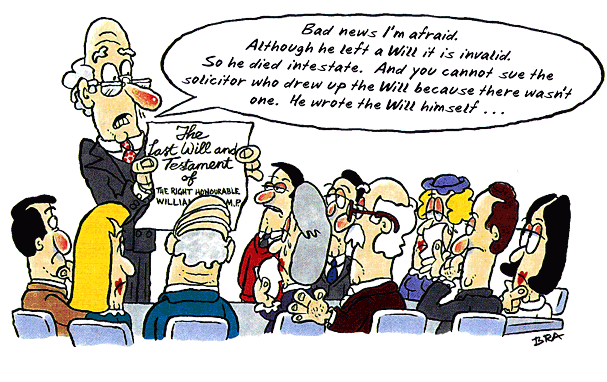
Texas Intestacy Chart: Who Inherits Without a Will
| Who survives you | Who inherits your probate property |
|---|---|
| Single, no children; both parents living | Both parents, in equal shares |
| Single, no children; one parent living; siblings or their descendants living | Surviving parent: one-half. Siblings or their descendants: the other half |
| Single, no children; one parent living; no siblings or their descendants | Surviving parent: everything |
| Single, no children; no parents living | Siblings and descendants of deceased siblings |
| Single or widowed, with children | Children in equal shares; descendants of a deceased child take that child’s share |
| Married; all children are also the surviving spouse’s children (or no children) | Community property: surviving spouse receives all |
| Married; at least one child from another relationship | Community property: surviving spouse keeps his or her half; the deceased spouse’s half goes to the deceased spouse’s children |
| Married with children: separate property | Spouse: one-third of separate personal property and a life estate in one-third of separate real estate. Children: the rest |
| Married without children: separate property | Spouse: all separate personal property and one-half of separate real estate. Other half of real estate: parents, siblings, or their descendants (if none, the spouse) |
| No spouse, descendants, parents, siblings, or their descendants | More distant relatives, split between the mother’s and father’s sides. The State of Texas only if no relatives can be found |
Who Inherits When a Single Person Without Children Dies Without a Will?
Under Section 201.001 of the Estates Code, if you are single, have no children, and die without a will:
- If both parents are alive, they inherit in equal shares.
- If one parent is alive and you have siblings or descendants of siblings, the parent inherits one-half and the siblings or their descendants share the other half.
- If one parent is alive and there are no siblings or descendants of siblings, the parent inherits everything.
- If neither parent is alive, your siblings and the descendants of deceased siblings inherit.
- If there are no parents, siblings, or their descendants, the estate is divided between relatives on your mother’s side and your father’s side.
This is how many single people would want their property distributed, but not all. A parent who has been absent for decades would still inherit. I have written about a real case in which a father who had not seen his son in more than 30 years inherited half of the son’s estate. A half-brother or half-sister would receive half the share of a full sibling; see inheritance rights of half-siblings.
Unmarried partners do not inherit
A long-term partner is not an heir under Texas intestacy law simply because the couple lived together, unless the relationship meets the requirements of an informal (common-law) marriage. Joint ownership does not have any bearing on this by itself. Unless a deed or account includes right-of-survivorship language or another transfer arrangement, the deceased partner’s share may pass to his or her legal heirs, leaving the surviving partner uncertain about whether he or she can stay in the home.
A woman once wrote to me about her sister, who had lived for 21 years in a home her partner bought before they met. He died without a will, survived by a son from an earlier relationship, and she wanted to know whether the son would get everything and leave her sister without a home.
Under the intestacy statutes, the son would be the sole heir. The Texas homestead protection that lets a surviving spouse stay in the family home for life does not extend to an unmarried partner, so the heirs can ask the partner to leave. If you want your partner to benefit from your estate, you need a will or another planning document.
Who Inherits When a Single Parent Dies Without a Will?
If you are single and have children, your descendants inherit your estate. Children in the same generation share equally. If a child died before you and left children of his or her own, those grandchildren share the deceased child’s portion.
For example, if you had three children and all survive you, each inherits one-third. If one child died before you and left two children, those grandchildren split their parent’s one-third. If none of your children survive you but six grandchildren do, each grandchild inherits one-sixth.
This formula offers no flexibility for need, responsibility, or disability. A child receiving SSI or Medicaid may lose benefits after inheriting outright. And if a child is a minor, someone has to be appointed by a court to manage that child’s inheritance until age 18, when the child receives it outright.
What Happens When a Married Person Dies Without a Will in Texas?
Many people assume a surviving spouse inherits everything. In Texas, that is often not the case. The result depends on whether property is community or separate property, and on whether the deceased spouse has children from another relationship.
Community property
Community property is generally everything either spouse acquired during the marriage, other than gifts and inheritances. Income earned during the marriage is community property even if it sits in an account in one spouse’s name.
Under Section 201.003, the surviving spouse inherits all of the community property if the deceased spouse had no children, or if all of the deceased spouse’s children are also children of the surviving spouse. But if the deceased spouse had a child from another relationship, the deceased spouse’s one-half of the community property passes to his or her children. The surviving spouse keeps only his or her own half.
Imagine John and Jane are married. If their only children are children they share and John dies without a will, Jane inherits all of their community property. If John also has a child from a prior marriage, Jane keeps her half, and John’s half passes to all of his children, including the stepchild Jane may barely know.
A man wrote to me after his wife of sixteen years died without a will. Both of them had been married before and had children from those marriages. His wife never worked outside the home and never contributed financially to the mortgage, but income earned and property acquired during a marriage is presumed to be community property, so she owned half of the house. Because she left no will, her half passed to her children, not to him. He was stunned, and unfortunately the statutes do not bend for fairness.
Separate property
Separate property is property owned before the marriage, property received by gift or inheritance, and property bought with directly traceable separate funds. Under Section 201.002:
- If the deceased spouse had children, the surviving spouse receives one-third of the separate personal property and a life estate in one-third of the separate real estate. The children receive the rest.
- If the deceased spouse had no children, the surviving spouse receives all of the separate personal property and one-half of the separate real estate. The other half of the real estate passes to the deceased spouse’s parents, siblings, or their descendants. Only if none of them survive does the spouse receive all of it.
Suppose John inherited a vacation home from his parents and never added Jane to the deed. If he dies without a will and has children, Jane receives only a life estate in one-third of the house, and the children own the rest. Disputes over use, maintenance, and sale are almost inevitable.
The no-children rule surprises people too. In one case I handled, a husband’s do-it-yourself will turned out to be invalid. The couple had no children and his parents were still living, so his widow ended up co-owning the land he had owned before their marriage with in-laws she had not spoken to in years. A will that meets the requirements of a valid will in Texas would have avoided that.
Another woman asked me whether she could fight the intestacy laws. She and her husband had been married 31 years, and he died without a will. He had three adult children from an earlier marriage. He had paid a large amount of child support, yet they had never been part of his life. Because there was no will, his half of the community estate went to those children, and she received only one-third of his separate personal property and a life estate in one-third of his separate real property. The statutes do not take a person’s unique circumstances into account. The time to change that outcome is while you are alive, by signing a will.
Dying while a divorce is pending
Until a divorce is final, you are still married. If you die without a will while your divorce is pending, your spouse inherits under the same rules above, regardless of the state of the relationship. If you are separating, a new will is one of the first documents to address. See can I change my will before my divorce is final?
Common-law marriage
Texas recognizes informal (common-law) marriage. If the surviving partner can prove that the couple agreed to be married, lived together in Texas as spouses, and represented to others that they were married, he or she has the same inheritance rights as any other spouse. Proving it after a death can be difficult and contentious.
Stepchildren and Adopted Children
Stepchildren are not heirs under the Texas intestacy statutes unless the stepparent legally adopted them. The statutes assume that someone who dies without a will would not want stepchildren to share in the estate.
Many families do not fit that assumption. I worked with a client who stayed close to his former stepson after his divorce and remarriage and wanted to provide for him. Without a will, that stepson would have received nothing. If you want a stepchild to inherit, you need a will or another estate planning document that names him or her.
Legally adopted children inherit from their adoptive parents exactly as biological children do, and the rule works in both directions: adopted children and their descendants inherit from and through their adoptive parents and relatives, and adoptive parents can inherit from and through an adopted child. For the rules on adopted children and their biological families, see can an adopted child inherit from his biological parents?
What Happens to Minor Children When Parents Die Without a Will?
If both parents die without a will, no document tells the court who should raise the children. A judge appoints a guardian based on the children’s best interests, and relatives may compete for the role. A court-supervised guardianship of the estate may also be needed to manage any property the children inherit. See who will raise my children if I die without naming guardians?
Will the State Get My Property?
Almost never. Texas places no limit on how distant a relative can be and still inherit. Property escheats to the State of Texas only if there are no living heirs at all. More often, the estate goes to distant cousins the deceased person never knew, sometimes called “laughing heirs.”
Property That Does Not Pass by Intestacy
Intestacy only controls probate property. These assets pass to the named person regardless of whether there is a will:
- Accounts and property held with an effective right of survivorship
- Retirement accounts and life insurance with designated beneficiaries
- Payable-on-death and transfer-on-death accounts
- Real estate covered by a transfer on death deed or lady bird deed
- Assets titled in a living trust
These designations can also work against you. In Ellen’s case, her grandfather had named one of his daughters as agent on his bank account. When he was hospitalized, she withdrew the money, and after his death she evicted Ellen from the house. Beneficiary designations and account titles should be reviewed along with any will. See beneficiary designations.
How Heirs Are Determined and the Estate Is Settled
Without a will, someone has to prove who the heirs are before property can be transferred. Depending on the estate, that may involve:
- A court proceeding to determine heirship, often with an attorney ad litem appointed to search for unknown heirs
- An affidavit of heirship recorded in the county where real estate is located
- A small estate affidavit for estates that qualify
- A court-appointed administrator, who must usually post a bond
Each step adds time and cost compared with probating a valid will that names an independent executor. When relationships are strained, intestacy also invites conflict: an estranged spouse or relative can ask to be appointed administrator, and every decision may need the agreement of people who do not get along.
Why Having a Will Matters
A will lets you decide who receives your property, including friends, partners, stepchildren, caregivers, and charities that intestacy ignores. It lets you nominate an independent executor, name guardians for minor children, and leave property in trust for a child who is a minor or has special needs. Together with up-to-date beneficiary designations, it replaces the statutory default with a plan built for your family.
Frequently Asked Questions
Does a spouse inherit everything in Texas without a will?
Not always. A spouse inherits all community property only if the deceased spouse had no children from another relationship, and a spouse often shares separate property with children, parents, or siblings.
Do children automatically inherit when a parent dies without a will?
Children are among the first heirs, but their share depends on whether there is a surviving spouse, what type of property is involved, and whether any child died leaving descendants.
Do stepchildren inherit if there is no will?
No, unless the stepparent legally adopted them. To provide for a stepchild, you need a will or another planning document.
Who inherits when an unmarried sibling dies without a will?
If the sibling had children, they inherit everything. If not, both parents inherit equally if living. If only one parent is living, that parent takes half and the brothers and sisters (or their descendants) share the other half. If neither parent is living, the brothers and sisters inherit all of it.
How can I prevent Texas intestacy law from controlling my estate?
Sign a valid will, keep beneficiary designations current, and consider a trust or transfer on death deed where appropriate. Review the plan after marriage, divorce, a death in the family, or a move.
Talk With a Texas Wills Attorney
If you are wondering how the intestacy statutes would apply to your family, or whether your current plan does what you intend, I can help. I have been licensed in Texas since 1994 and prepare wills and trusts for a flat fee quoted in advance.
Schedule a free introductory conference to discuss your estate plan.